The 10th Annual Update Highlights Continued Adoption of Standards and Increased Enforcement Related to Telehealth Services
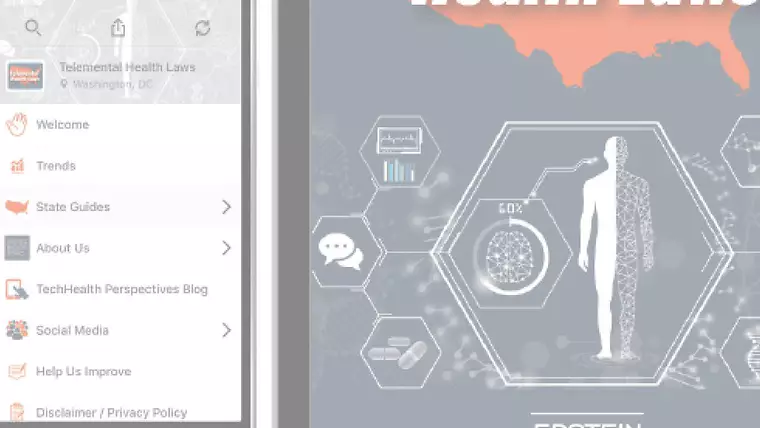
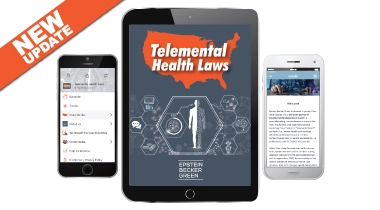
New York, NY – January 22, 2026 – Epstein Becker Green has released its latest updates to the Telemental Health Laws app—an extensive survey of state-specific laws and policies governing telehealth—which you can download for free here. The app helps providers and organizations navigate the complex, continually evolving legal landscape supporting telehealth services.
This year’s findings highlight a pivotal transition, as narrowed Medicare coverage, delayed U.S. Drug Enforcement Administration (DEA) rulemaking on remote prescribing, and intensified federal enforcement create new operational and legal complexities for telehealth providers nationwide.
Download Epstein Becker Green’s Telemental Health Laws App


Key Takeaways for Telehealth Providers and Organizations:
- Shifting Medicare policies hinder long-term stability. Flexibilities can change with short notice, putting reimbursement, care models, and staffing decisions at risk for mental and behavioral health providers.
- Remote prescribing rules remain a gray area. While telehealth prescribing is still allowed, permanent DEA rules are delayed. Providers face ongoing confusion about compliance, platform requirements, and state-by-state differences.
- Compliance challenges are escalating rapidly. Federal enforcement is expanding, with closer scrutiny of billing, documentation, and prescribing. One mistake can trigger audits, penalties, or legal exposure.
Since 2016, Epstein Becker Green has tracked and analyzed telemental and behavioral health laws to provide practitioners and stakeholders with critical guidance for compliance. The 10th annual Telemental Health Laws survey update arrives as the industry confronts a challenging regulatory landscape after the 2020 public health emergency, defined by the delay of key federal flexibilities and persistent uncertainty.
The latest updates unpack some of the following issues:
Medicare Telehealth Flexibilities Temporarily Extended
Medicare telehealth flexibilities remain in effect through at least January 30, 2026, following multiple short-term legislative extensions. These provisions continue to allow beneficiaries to receive reimbursable care in their homes without geographic or originating-site restrictions, and in-person visit requirements for telemental health services remain on hold. Although Congress applied these flexibilities retroactively after a brief lapse in fall 2025, long-term permanence remains uncertain as lawmakers debate broader telehealth reform.
DEA’s Remote Prescribing Rules Delayed
The DEA has again delayed finalizing a permanent framework for remote prescribing of controlled substances. In the meantime, COVID-19-era prescribing flexibilities were extended through December 31, 2026, allowing providers to continue prescribing without in-person visits or separate state registrations. Ongoing federal enforcement efforts further heighten the need for strong compliance practices.
State Regulations Stabilized and Refined
At the state level, Epstein Becker Green’s survey observes a trend toward regulatory stabilization. Rather than enacting large-scale changes, states such as Mississippi, Nebraska, New York, Pennsylvania, and South Dakota refined existing frameworks, particularly regarding Medicaid reimbursement, with a focus on audio-only telehealth services.
Epstein Becker Green’s Telemental Health Laws app
As a comprehensive resource for navigating this environment, Epstein Becker Green’s Telemental Health Laws app provides the essential guidance organizations need to ensure their operations align with current state requirements.
The Telemental Health Laws survey is coauthored by Amy Lerman, Audrey Davis, and Avery Schumacher, with support from Spreeha Choudhury, Bailey Cremeans, Hailey Genaw, Chloe Hillard, Lorrin Melanson, Kyla Perrotta, Jean-Claude Velasquez, Will Walters, and Wan Zhang. The following 2025 Epstein Becker Green Summer Associates provided research and drafting support: Himani Gubbi, Julia Renfroe, Chloe Shumaker, and Sahar Tirmizi.
About Epstein Becker Green
Epstein Becker Green is a national law firm focused on health care and life sciences; employment, labor, and workforce management; and litigation and business disputes. Our attorneys advise clients at every stage of their business lifecycle, delivering practical, results-driven counsel that shapes strategy, accelerates growth, and safeguards what matters most. We serve organizations of every size, from emerging startups to Fortune 100 companies, across the health care, life sciences, financial services, retail, hospitality, and technology industries, with sound legal solutions they can depend on when it counts. www.ebglaw.com
Download Epstein Becker Green’s Telemental Health Laws App
More Like This
People
Services
Media Contact
- Director of Marketing Communications